
Revive Family Chiropractic: meet the office before you ever walk in.
Revive Family Chiropractic cares for families in Moore, Oklahoma — newborns to grandparents. HMM built the practice a bright, photo-filled website where a nervous first-time patient can see the rooms, meet the doctor, and get straight answers before the first call, then aimed local search at it. Six months later, Google clicks were up 646 percent.
- Revive Family Chiropractic
- Family chiropractic care
- Website design, content, build, local SEO
- 2–3 weeks, kickoff to launch
646 percent growth
growth in Google clicks over the first six months
533 percent growth
growth in search impressions — 16,200 appearances in results
2–3
weeks from kickoff to a live, public site
Who is Revive Family Chiropractic?
Dr. Jake Edwards, DC has practiced in the Oklahoma City area since 2015 and built Revive around a simple idea: every body is different, so care should be too. He runs the Moore office with his wife Jordan, LPC. The practice treats whole families — pregnancy care, newborn checks, kids, athletes, and the grandparents who drove everyone there — and Dr. Edwards holds Webster Technique certification through the International Chiropractic Pediatric Association, a credential specific to safe prenatal adjustment.
Nobody chooses a chiropractor casually. Parents research. First-time patients arrive with questions and a healthy dose of nerves. The website had to do what the office does in person: put people at ease, answer honestly, and never pressure anyone into a plan.
Feel like the visit
Bright, human, and filled with photos of the actual office, so the connection starts before anyone opens the door.
Answer every audience
A parent with a fussy newborn and an athlete with a bad back need different answers from the same practice — each got a page of their own.
Show up across the metro
Moore first, then Norman, Oklahoma City, and Edmond — a dedicated local page for each city people actually search from.
What does an inviting chiropractic website look like?
Like the office, before you get there. The build is interactive, inviting, bright, and human — and it leans hard on photography. The hallway where the kids wait, the adjustment rooms, Dr. Jake mid-adjustment, the Edwards family being goofy behind wellness magazines. Every scroll builds a little more familiarity, so the environment a patient will walk into is one they have already seen.
Five screens, five decisions
Most patients meet Revive on a phone, so the site was designed for a thumb first. These are live screens from okrevive.com.
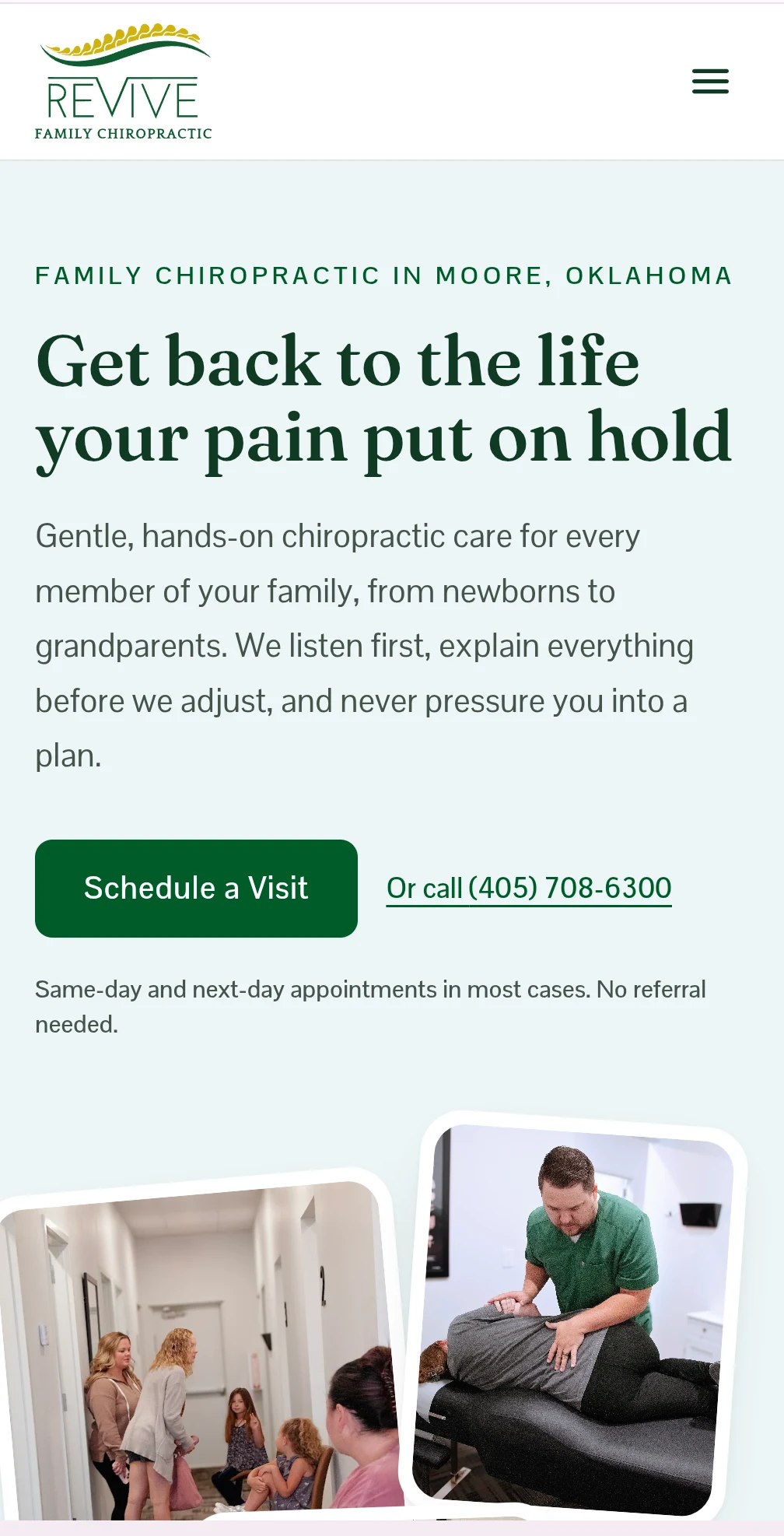
One promise, one button, real rooms 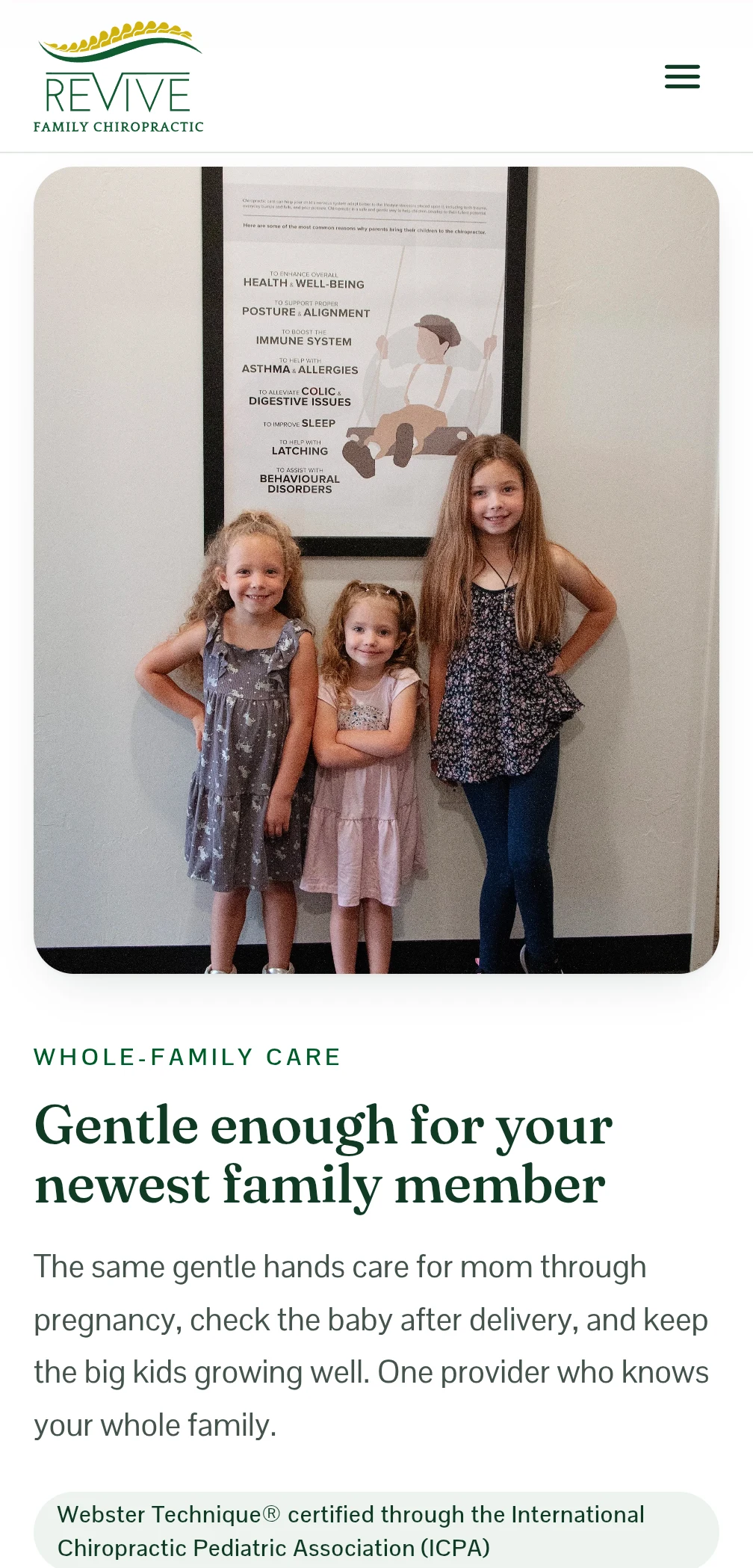
Certifications, right where parents decide 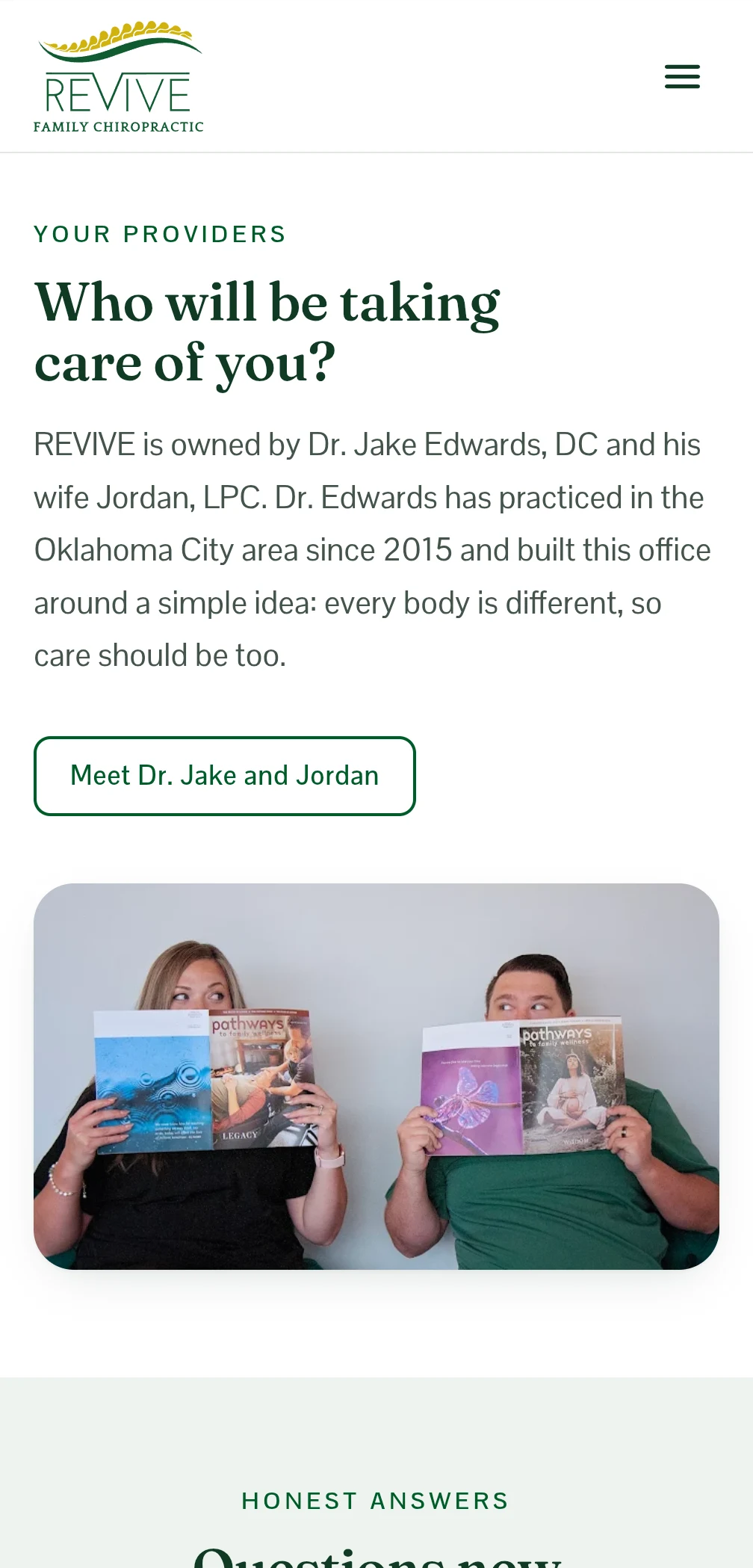
The Edwards family, magazines and all 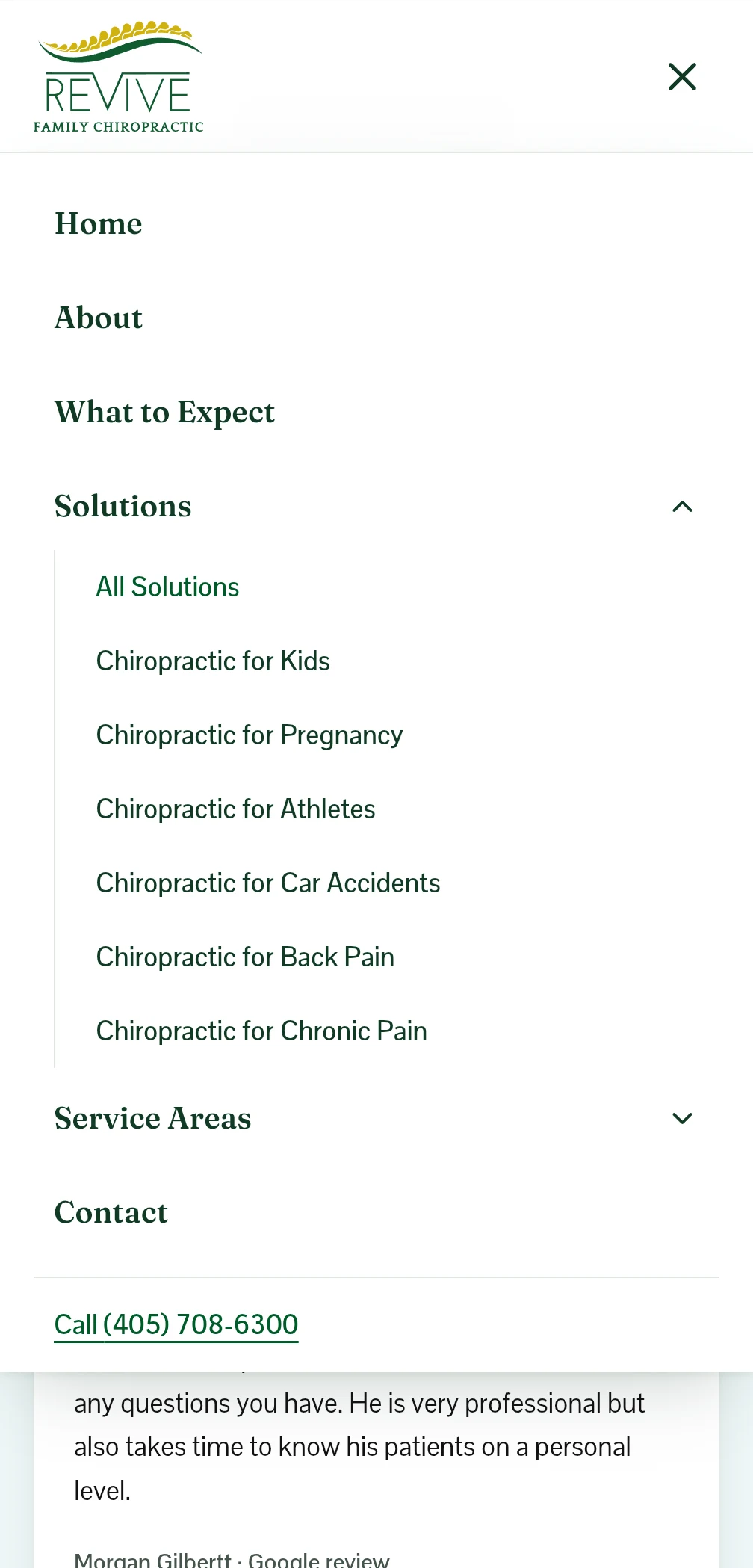
A menu organized by who is hurting 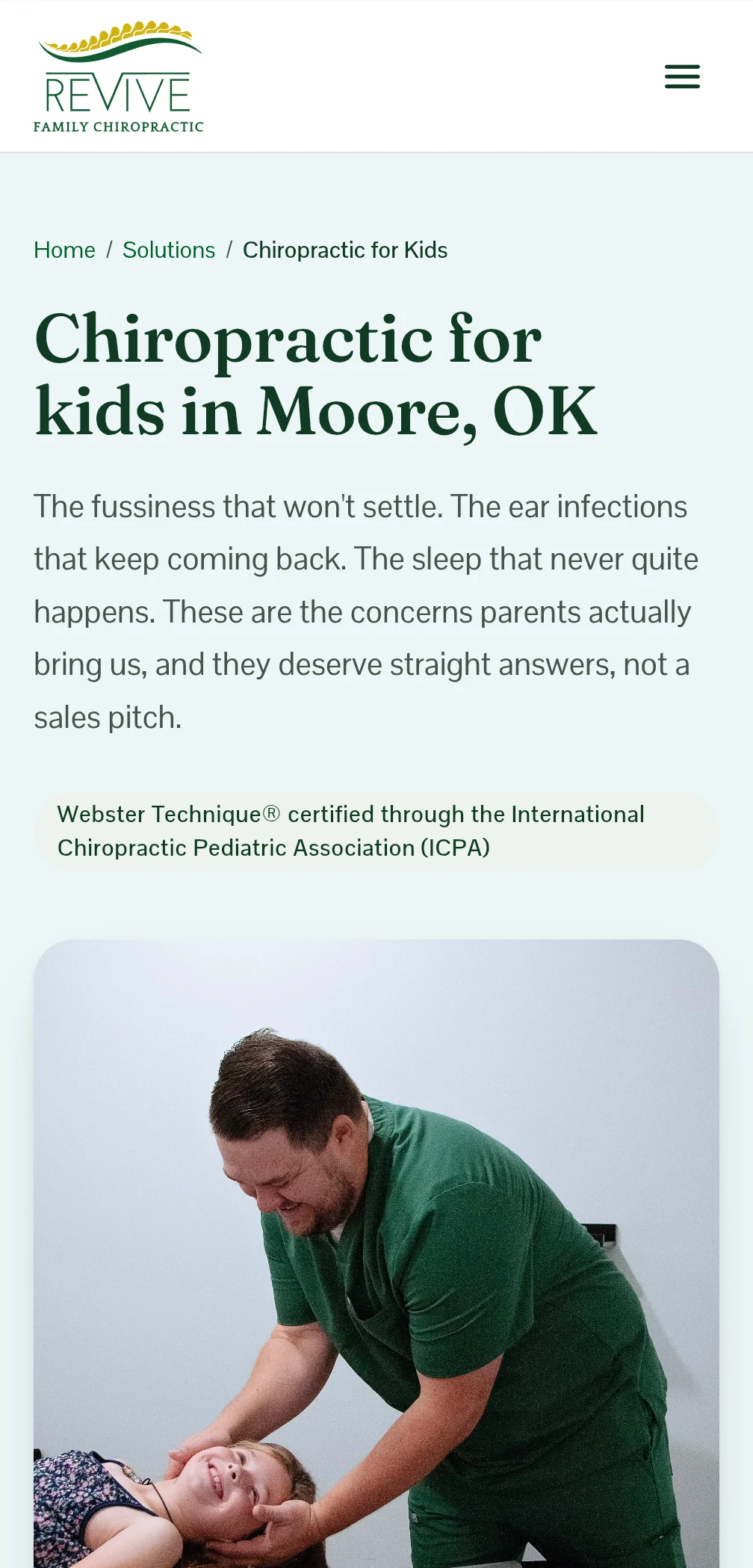
Service pages that talk like a parent
What holds the look together?
The whole system comes out of the Revive logo — a gold arch of leaves curving over a green swoosh, a spine drawn as something growing. Practice green carries the interface, pacific blue cools the surfaces, and the gold stays rare enough to mean something. Every token below is published on the site’s own style guide, contrast ratio included.
A palette that shows its math
Each color role documents its own WCAG contrast ratio — the accessibility standard for legible color — and the two brand colors that cannot carry body text, gold and pacific blue, each ship with a darker “accessibility substitution” token for text duty. The swatches are interactive: select one to copy its hex value.
Type with a bedside manner
Headlines are set in Fraunces, a warm, soft-edged serif chosen as the web stand-in for the brand guide’s Adobe-only Adonis, over body copy in Pontano Sans — 19px lede paragraphs with relaxed leading, 16px body, 14px muted captions. Explaining before adjusting, in type form.
A photography rule with teeth
Written into the style guide itself: authentic in-clinic photos only, never stock. Every face on the site works there or gets adjusted there — which is the entire reason the site can build trust before the first visit.
Soft geometry, four surfaces
Three radius tokens — rounded-soft, rounded-card, rounded-photo — with card and lift shadows, applied across four named surfaces: plain white cards, mist cards for editorial content, sage cards for FAQ and reassurance blocks, and deep green conversion bands with gold accents. Nothing sharp-edged, in a business built on gentle hands.
A living style guide
All of it lives in CSS variables behind a public style guide page — HMM ships one with every build. Adjust a token there once and the entire site follows, which keeps the brand consistent long after launch day.
Where did the words come from?
From the doctor, on camera. The build ran on the same proprietary process behind our Fremantle Lake build, with one addition made for a medical practice: the source material for every page was Dr. Edwards himself.
Put the doctor on camera
A series of video interviews with Dr. Edwards: how he explains care to a nervous parent, what a first visit actually involves, which certifications matter and why, and how his approach changes for a newborn versus an athlete. The transcripts became the raw material for the entire site.
Draft with the engine, design by hand
HMM’s content engine — a proprietary script that works hand in hand with Claude Code, Anthropic’s AI coding tool — turned those transcripts into first-draft copy and page structure built to SEO and accessibility standards, while our team designed the bright, photo-forward layout around it. Service pages, local pages, and design moved in parallel, which is where the 2–3 week timeline came from.
Proof it, then publish
Every page was proofed and edited by an HMM staff member and by Dr. Edwards before going live — no draft shipped on the AI’s word alone. The finished site deploys from its GitHub repository to Vercel, which serves pages from a global edge network, meaning fast loads wherever the visitor is.
What happened once Google found it?
The search strategy made three moves. Local landing pages for Norman, Oklahoma City, and Edmond alongside the Moore homepage, because people search their own city, not a brand name. Audience-specific service pages — kids, pregnancy, athletes, car accidents, back pain, chronic pain — so every kind of patient lands on an answer written for them. And credential callouts, like the Webster Technique certification, placed at the exact moments a parent decides whom to trust.
646 percent growth in Google clicks
growth in Google clicks across the first six months after launch — 209 clicks and 16,200 impressions, with impressions up 533 percent over the same window.
209
Google clicks in the first six months, up 646 percent
16.2K
times the practice appeared in search results, up 533 percent
+51%
impressions in the most recent ninety days — still climbing
+300–400%
quarter-over-quarter click growth on the Norman, Oklahoma City, and Edmond local pages
The receipts, straight from the reporting. The six-month view shows clicks and impressions compounding after launch; the Search Console view shows where they land — the homepage ranking as “Chiropractor in Moore, OK,” with the young suburb pages growing fastest.
What do those clicks mean for the practice?
Almost every one of those clicks is a person in the Oklahoma City metro with a spine problem and a decision to make. They land on a site where the doctor is a face, the office is familiar, and the answer to their exact worry — a colicky newborn, a car accident, a pregnancy — is written in plain language. Scheduling and the phone number sit one tap away, with same-day and next-day appointments in most cases.
Revive also owns the machine underneath it. The site lives at www.okrevive.com, deploys from a GitHub repository the practice controls, and serves globally through Vercel — no page-builder lock-in, and room to add the next city page or service page whenever the practice grows into it.
What do people ask about builds like this?
How long did the Revive Family Chiropractic website take to build?
Two to three weeks from kickoff to launch. The build ran on HMM's proprietary development process — a content engine working hand in hand with Claude Code, Anthropic's AI coding tool — so design, copy, and the local SEO pages moved in parallel instead of single file. The site deploys from GitHub to Vercel.
Where did the website copy come from?
From the doctor. HMM ran a series of video interviews with Dr. Jake Edwards about how he cares for patients, then used the transcripts as the source material for each service page draft. An HMM staff member and Dr. Edwards proofed and edited every page before it went live, so the finished copy reflects the practice's real expertise rather than generic chiropractic boilerplate.
What is a local landing page?
A page built for one nearby city — okrevive.com has them for Norman, Oklahoma City, and Edmond alongside the Moore homepage. People search the way they live, typing phrases like chiropractor in Norman OK rather than a practice name, and a genuine city page gives that search somewhere to land. In the most recent quarter measured, clicks to those pages grew 300 to 400 percent.
Does AI-drafted copy hurt a medical practice's credibility?
Only if nobody checks it. Every Revive draft started from Dr. Edwards' own recorded answers, and nothing published until he and an HMM editor approved it. The AI moved the mechanical work of drafting; the expertise, the corrections, and the final word stayed with the doctor — which is exactly the order search engines reward.
This build pairs our website design service with our SEO practice. Or browse the rest of the case studies.
A note on how this page was made
AI tools helped draft some of the writing on this page. All of the content was written or reviewed by the HMM team before publication, and every figure is read directly from Revive Family Chiropractic’s search reporting.