

AI-driven search is transforming how industrial buyers research and evaluate suppliers. Tools like Google’s AI Overviews, Perplexity, Bing Copilot, and ChatGPT now answer technical and sourcing-related questions directly in search results. This reduces clicks and limits opportunities for manufacturers who rely on traditional SEO to drive requests for quotes and leads.
This guide outlines a practical, modern framework for AI SEO and Generative Engine Optimization (GEO) for manufacturers and industrial suppliers. By using these strategies, you can show up in both traditional results and AI-generated answers for technical manufacturing capabilities to protect visibility, keep building authority, and increase qualified leads.
- AI search is replacing clicks with on-page answers. Manufacturers must become the cited source, not just a search result.
- Success = content that AI can interpret, extract, and trust.
- Focus on four pillars:
- Own the topic: Hub-and-spoke content that covers all related questions (query fan-out).
- Structure for extraction: Q&A headings, fast definitions, schema, scannable formatting.
- Build authority: PR, directories, expert mentions, and consistent industry terminology.
- Stay technically clean: Fast pages, strong internal links, clear structure, indexable content.
- Own the topic: Hub-and-spoke content that covers all related questions (query fan-out).
Result: More AI citations, more qualified demand, stronger visibility across search + AI assistants.
What Is AI SEO and GEO?
AI SEO (sometimes called Answer Engine Optimization or Generative Engine Optimization) is the process of structuring your content so AI systems like Google AI Overviews, Bing Copilot, and ChatGPT can easily interpret, reference, and cite it.
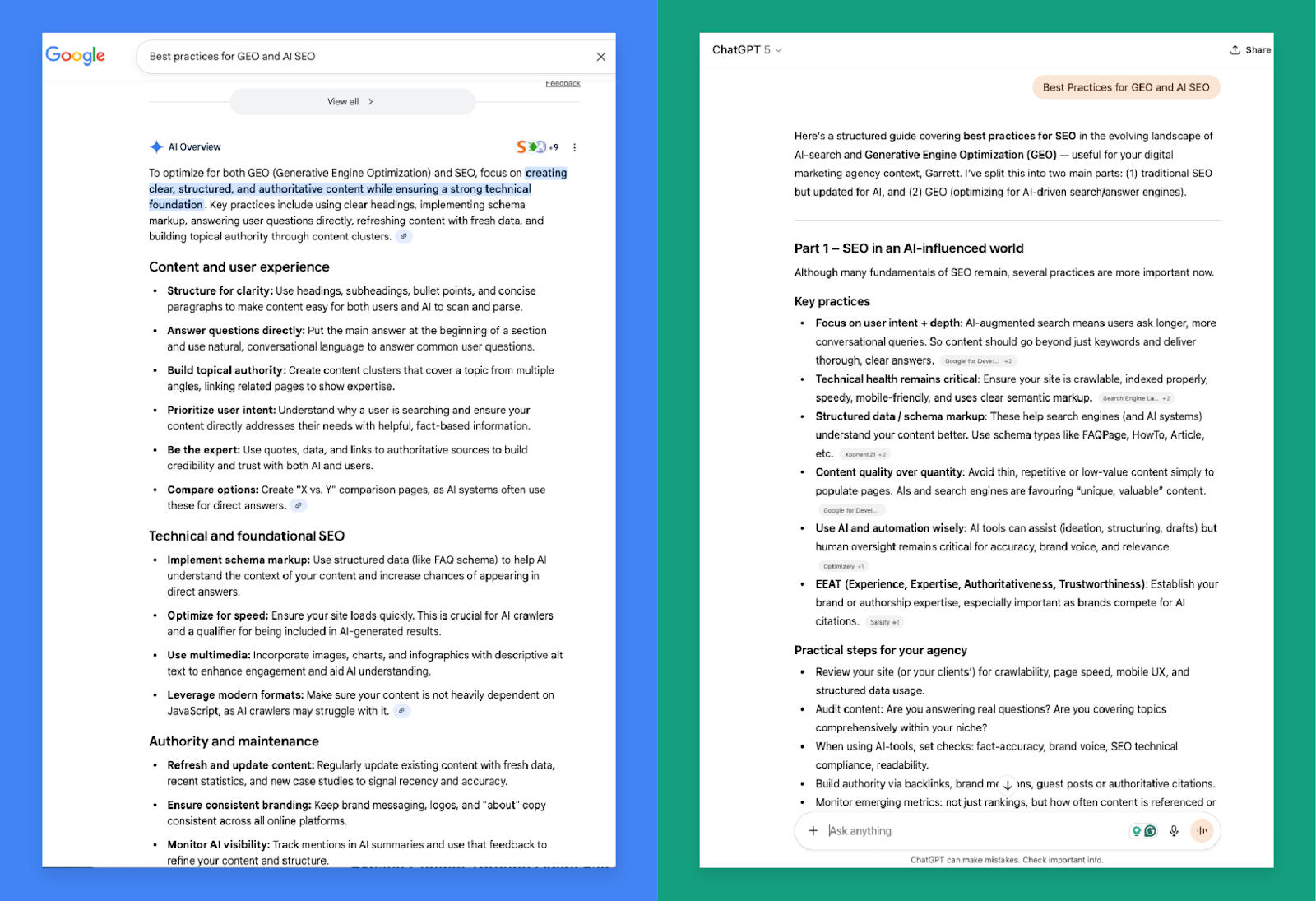
Traditional SEO for manufacturing focused on ranking a webpage as a blue link. AI SEO focuses on becoming the quoted answer. Search engine land, a leading news provider in the SEO space, has a great article that deep dives on GEO here.
For manufacturers, this shift is critical: buyers will increasingly ask AI tools things like:
- “Who are the best injection molding suppliers in the U.S.?”
- “How do I fix warping and distortion in a sheet metal forming process?”
- “What’s the difference between 5-axis CNC machining and 3-axis CNC machining?”
These are complex, intent-driven questions, often asked through AI. If your brand isn’t cited in these results, you’re invisible to the modern industrial buyer.
The manufacturers that adapt now will own critical digital real estate others are still ignoring.
Why It Matters for Manufacturers
- AI summaries and answer boxes are consuming clicks that used to go to organic listings
- Highly technical, niche, “how-to” and sourcing questions that are common in manufacturing are exactly the queries AI engines like to expand and answer
- Manufacturers depend on trust, expertise, and clarity which means content must now be written for both humans and machines
- SEO and now all digital marketing for manufacturers requires a different approach built around technical authority, niche queries, and the trust signals AI engines actually reward.
Picture this: An engineer at a power plant runs into issues with a piece of testing equipment. Instead of calling support, they ask ChatGPT for help. The AI tool cites a competitor’s guide, not the original manufacturer’s, and that competitor earns trust, visibility, and likely the next sale.
That’s the new reality of search: visibility now extends beyond Google. For manufacturers, showing up in AI results isn’t just about traffic, it’s about staying top of mind when decisions are made.
To make this more concrete, let’s look at how one manufacturing segment is applying current SEO strategies and how GEO differs.
How Manufacturers Are Using SEO Today
Manufacturers use SEO to influence how buyers discover and evaluate suppliers before an RFQ is ever submitted. Engineers and procurement teams search for specific capabilities, certifications, and process expertise and SEO helps manufacturers surface during that critical early research phase.
High-performing industrial sites typically emphasize core capabilities, materials expertise, quality standards, industry focus, and location signals that support regional searches. In practice, SEO functions as a credibility layer, making technical information accessible upfront to move conversations from discovery to serious evaluation faster.
As AI-driven search changes how that information is consumed, manufacturers need to evolve beyond traditional keyword targeting: translating expertise into answers, structuring content for extraction, and reinforcing credibility consistently across topics.
The distinction is simple: traditional SEO helps manufacturers get found, but the new future will be that AI SEO/GEO determines whether they get referenced and trusted when buyers rely on AI to narrow their supplier list.
To make this more concrete, here's how two manufacturing segments are applying AI SEO right now:
CNC Machining Companies
CNC machining companies use SEO to influence how buyers discover and evaluate suppliers before an RFQ is ever submitted. However, AI search is changing where that influence happens. Buyers ask things like "5-axis vs. 3-axis CNC machining" or "best CNC machining tolerances for aerospace components," and the content that directly answers those process and material questions, structured for extraction, is what moves a CNC company from a search result to a cited source.
Metal Fabricators and Metals Producers
Metal fabrication is one of the highest-opportunity segments for GEO right now because buyers ask highly specific, process-driven questions that AI loves to answer like:
- "what's the difference between MIG and TIG welding for stainless steel"
- "laser cutting vs. waterjet for aluminum sheet metal"
- "who are the top steel fabricators in the Midwest."
To get cited in those answers, metal fabricators need to structure content around alloy-specific and process-specific questions, mark up certifications (ISO 9001, AISC, AWS) using schema so AI can confidently surface them as credentialed sources, and maintain consistent profiles in directories like ThomasNet, Kompass, and industry-specific supplier databases that AI platforms pull from when generating vendor recommendations.
Expand Content Through Query Fan-Out
AI doesn’t answer just one query, it expands (“fans out”) into a network of related questions, comparisons, definitions, fixes, and buying criteria. If you want AI systems to reference your content, you must own the entire topic, not just the main keyword.
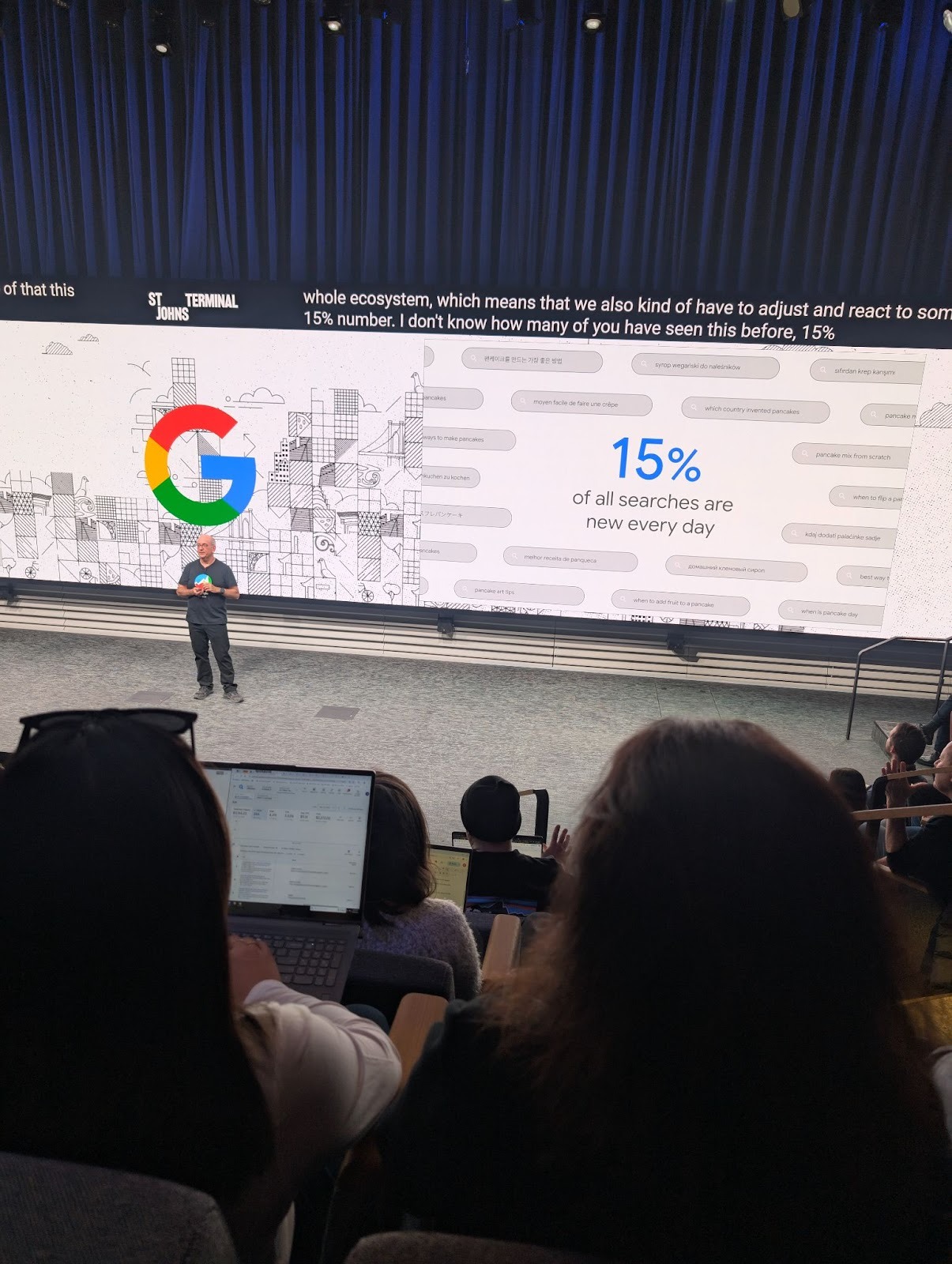
Google says 15% of searches each day are brand new, underscoring how many “no-volume” or unique queries exist. In AI search, that number could be far higher. So winning means owning full topics, not single keywords.
Real Examples of Manufacturing Queries
Across different manufacturing sectors, buyers commonly ask questions like:
- “What’s the difference between additive and subtractive manufacturing in aerospace prototyping?”
- “How does waterjet cutting compare to laser cutting for precision sheet metal work?”
- “What should I look for when selecting a contract electronics manufacturer (CEM)?”
- “How do textile manufacturers ensure sustainable dyeing and finishing processes?”
- “Where can I source FDA-compliant packaging for nutraceutical products?”
- “How much does custom glass bottling cost for small-batch beverage production?”
Each of these is a starting point, but AI doesn’t stop there.
To win in AI results, your content should address not just the original question, but the expanded set of questions AI will likely associate with it.
Use a Hub-and-Spoke Format
The best structure for capturing query fan-out is the hub-and-spoke content model:
- Hub Page: The authoritative guide, e.g., “The Complete Guide to Injection Molding”
- On-Page FAQ: Address 6–12 of the most common sub-questions directly on the hub
- Spoke Articles: Publish deeper supporting pages such as:
- “Injection Molding vs Die Casting (Pros, Cons, and Costs)”
- “How to Fix Short Shots in Injection Molding”
- “Best Materials for Injection Molding (And When to Use Them)”
- “Injection Molding vs Die Casting (Pros, Cons, and Costs)”
- Interlink Everything: Link hub → spokes and spokes → hub, so AI sees topic depth and topical relationships
This structure increases your search visibility, reinforces your topical authority, and significantly improves your chances of being retrieved, referenced, or cited in AI answers.
Structure Content for AI Answers
To be cited, your content must be direct, scannable, and structured.
Use Q&A Formatting
Write headings as questions and answer them immediately (1–3 sentences) before adding detail. This mirrors how AI parses and extracts.
Lead With the Answer
Don’t bury definitions or steps. If a user wants:
- A definition → define it immediately
- A how-to → list the steps first
- A comparison → give the verdict upfront
Use Schema to Reinforce Meaning
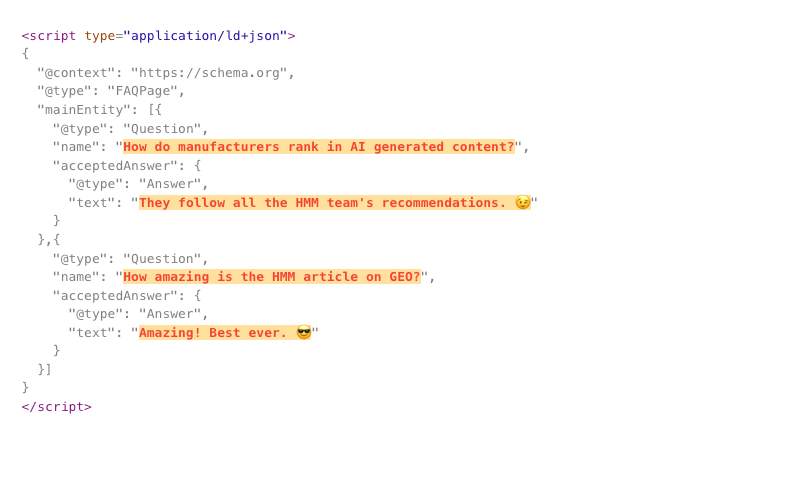
Add relevant structured data from schema.org (FAQ, HowTo, Product, etc.). It helps machines understand your content and increases consistency across systems.
Use Industry Terminology
AI rewards clarity and domain expertise. Don’t avoid technical terms, define them so they can be understood by the layperson.
Keep Content Fresh
Evergreen topics should still be updated and timestamped. AI favors recency and factual confidence, as shown in this recent Ahrefs study about how AI prefers to cite “fresher” content.
Use AI Tools to Work Faster (Not Lazier)
AI is not here to replace your expertise; it’s here to help you move faster, scale smarter, and stay focused on high-impact work. For manufacturers juggling complex product lines and limited marketing bandwidth, AI SEO tools can act like a digital assistant: streamlining repetitive tasks while surfacing high-value insights.
But the key is using AI to support your team. Let automation handle the heavy lifting while humans provide the strategic oversight.
Where AI Adds Real Value
1. Keyword and Question Brainstorming
AI tools like ChatGPT or Jasper can help you uncover long-tail queries buyers are asking about your industry. For example:
- “What would a facilities manager search for before requesting a quote on metal fabrication?”
- “What are common questions about cleanrooms in aerospace manufacturing?”
Use these prompts to generate dozens of content ideas or FAQ entries you might not discover through traditional keyword tools alone.
2. Content Outlining and Draft Acceleration
Once you’ve defined a content cluster or page topic, AI tools can speed up the outline process by suggesting headers, section order, and even intro paragraphs. This is particularly helpful when building out large pillar pages or supporting blog content.
You can also generate draft copy for less complex tasks like:
- Meta Titles
- Meta descriptions (or do these matter anymore?)
- Image alt text
- Content summaries
- Structured Markup
- Product category blurbs
- Location landing pages (with geographic modifiers)
3. Identifying Content Gaps
AI SEO platforms like SEMrush talk AI to scan your site and compare it to top-performing competitors. This helps you identify missing pages, weak topic coverage, or under-optimized clusters. You may discover:
- Keywords you’re not targeting but should be
- Subtopics that competitors cover in more depth
- Pages that are missing schema or internal links
These tools also prioritize which content updates will yield the highest impact—crucial when resources are limited.
AI SEO Tools Worth Using as a Manufacturer
| Category | Tools | What It Does |
|---|---|---|
| LLM Visibility Tracking | Profound, Otterly | Tracks where and how often your brand is cited in ChatGPT, Perplexity, and Gemini responses |
| Structured Data & Schema | Google's Rich Results Test, Schema.org Markup Validator, Merkle Schema Generator | Generates and validates FAQ, HowTo, and Product schema so AI can extract and trust your content |
| Content Gap Analysis | Search Atlas, Ahrefs (AI Content Grader), SEMrush | Identifies missing topic coverage, weak clusters, and pages competitors rank for that you don't |
Build Brand Authority for AI
AI systems favor brands that demonstrate credibility across trusted industry sources. Strengthening your authority signals helps AI associate your company with specific manufacturing categories, products, and expertise.
Invest in Digital PR
- Target industry publications, trade associations, and manufacturing news sites
- Seek interviews, expert quotes, and bylined articles
- Prioritize niche relevance (CNC machining, metal fabrication, industrial automation, injection molding) for stronger entity association
Get Included in “Best Of” and Supplier Roundups
- Pitch editors and partners for inclusion in lists and roundup pages which are commonly referenced by AI when recommending vendors or suppliers:
Show Up in Industry Communities
- Participate in Reddit (e.g., r/manufacturing), Quora, and niche industry forums
- Provide technical insights, answer sourcing questions, and contribute to discussions
- Avoid spam. AI and these communities reward credible participation, not promotion
Be Present in Trusted Manufacturing Directories
- Maintain accurate, consistent profiles on ThomasNet, Kompass, MFG, and industry-specific directories
- Cross-link these listings back to core service pages for stronger entity connections
Keep Messaging and Terminology Consistent
- Use the same product names, claims, certifications, and technical language across your website, PR, directories, and case studies
- Consistency strengthens your brand as an entity—making it easier for AI to confidently connect your company with your core capabilities
Don’t Neglect Technical SEO
Even the best content won’t be cited by AI systems if your website is slow, disorganized, or difficult for crawlers to interpret. Technical SEO remains the foundation that enables AI and search engines to understand, index, and reference your pages.
Focus on the essentials:
- Fast, mobile-friendly pages that pass Core Web Vitals
- Logical, crawlable site structure
- Internal links that create topical relationships and context
- Updated XML sitemaps, robots.txt, and on-page metadata
Pro Tip: Regularly review your server logs to identify search engines and AI crawlers (such as Google-Extended, Bingbot, or GPTBot). This helps you verify that your content is being discovered, monitor crawl frequency, and spot early signs of traction in AI search systems.
Final Reminder for Manufacturers
AI isn’t replacing search, it’s absorbing it. The manufacturers who win are the ones whose content becomes the default answer across both search engines and AI assistants. By creating structured content, expanding coverage, proving authority, and maintaining technical excellence, you position your brand to:
- Appear in more AI-generated answers
- Drive more qualified traffic
- Capture more bottom-funnel demand
This is the new SEO. It rewards clarity, authority, and relevance and manufacturers who adapt now will own their category for years to come.


.png)